A landscaping website has one main job. It turns a visitor who likes your work into a person who asks for a quote. Most of those visitors arrive on a phone, so the site must load fast and show your best projects at once.
This guide explains what a landscaping website needs, which pages to build, and eight checks to run before you pick a theme. It also shows how Landcap, a landscaping WordPress theme on Agratri, matches those checks.
What a landscaping website must do
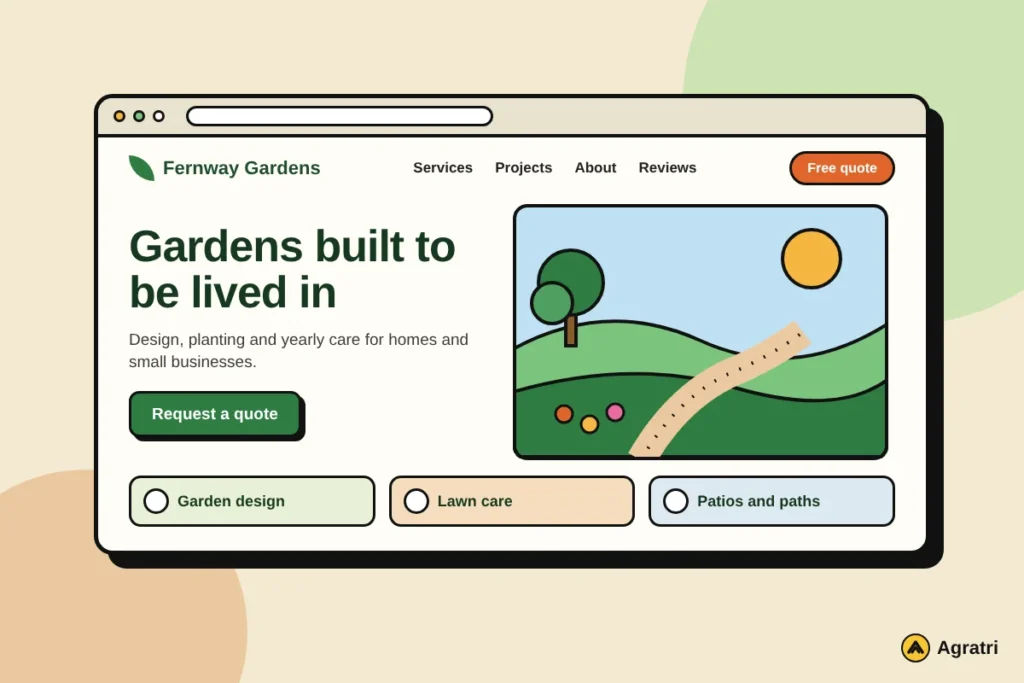
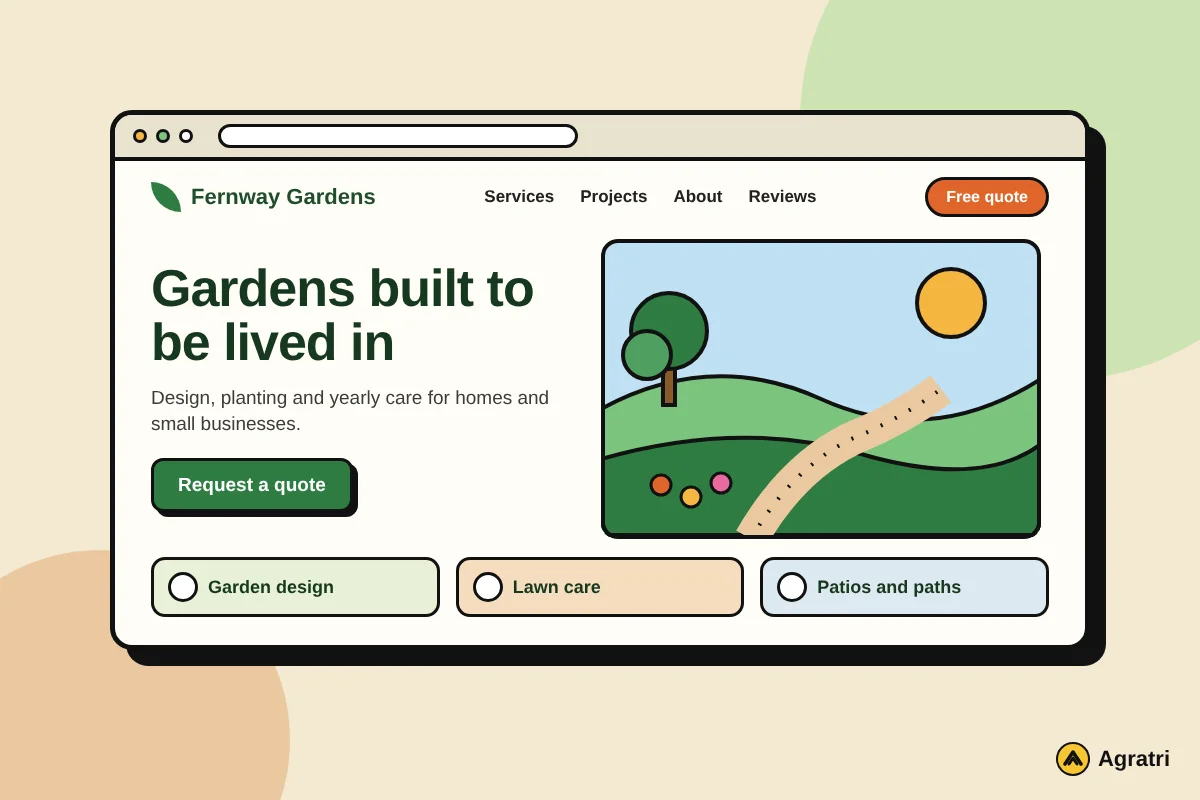
People who search for a landscaper want three answers. First, what do you build or maintain? Second, do you work in my area? Third, how do I ask for a price? So the top of your home page should answer all three. A good landscaping website does this in the first screen, before anyone scrolls.
Photos matter more here than in most trades. A garden is a visual product, and a buyer judges your skill by what they see. However, big photos can slow a page down, which hurts both visitors and search results.
Trust is the other half. Homeowners let you into their yard, and businesses let you care for their grounds. Because of that, your landscaping website should show real projects, clear services and honest contact details. Stock photos rarely build trust, so use your own work wherever you can.
Pages every landscaping website needs
You do not need fifty pages on a landscaping website. You need the right ones, each with a clear purpose. A short, focused site often works better than a large one, because visitors find the answer faster.
- Home: a clear headline, one strong photo, a quote button and three or four services.
- Services: one section or page for each job, such as garden design, lawn care or hard landscaping.
- Gallery or portfolio: finished projects with a short note on what you did.
- About: who you are, how long you have worked, and the area you cover.
- Reviews: real words from real customers.
- Contact or quote request: a short form, a phone number and your opening hours.
Seasonal work also shapes the content. For example, you may promote spring planting in March and leaf cleanup in autumn. Keep a spot on the home page that you can change quickly, so the offer always matches the time of year.
If you are not sure what to write on each page, a written plan helps. Our website design brief checklist shows how to collect that information before you start.
8 checks before you choose a theme
Many themes look good in a demo, yet few are right for a landscaping website once real content goes in. The real test is how a theme works once your own photos and text are inside it. Use these checks in order.
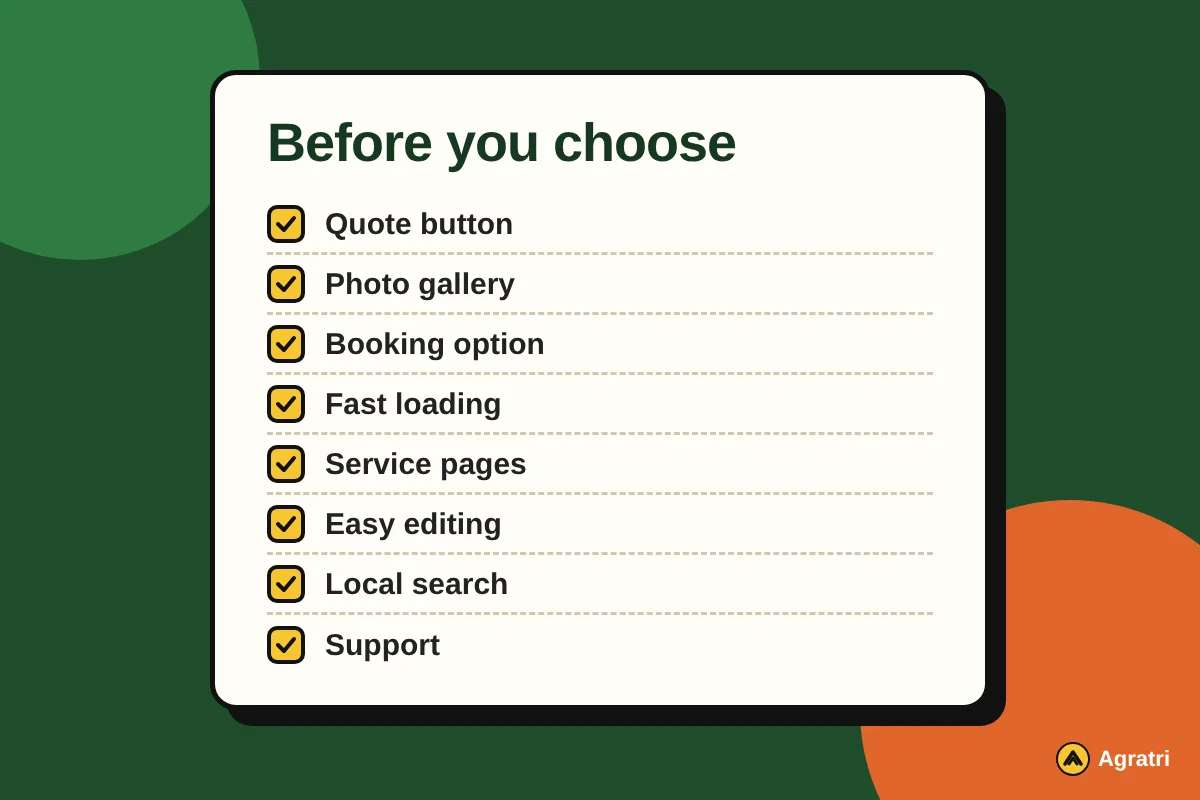
1. A quote button on every page
Visitors should never hunt for the next step. Look for a header button that stays visible, such as a free-quote call to action. Then test it on a phone.
2. A gallery that handles many photos
Every landscaping website lives or dies by its gallery. Check that the theme has a portfolio or case study layout, and that images open cleanly on small screens. Also check that you can add a short description under each project.
3. Booking or appointment options
Some firms book site visits by calendar, while others only take a form. Decide which one you need. If you want visitors to pick a time, choose a theme that supports an appointment calendar.
4. Fast loading with real content
Demos are often light because they use small sample images. Add your own photos, then test the page. Google explains how to measure real page experience in its guide to Core Web Vitals. As a result, you know which images to shrink before launch.
5. A layout that fits your services
A lawn care firm and a garden designer do not need the same landscaping website layout. Check that the demo has room for your service list, a process page and a project gallery. A theme that already includes these pages saves hours of work.
6. Easy editing without code
You will change photos and text often, especially when the seasons turn. Pick a theme with a visual page builder or a clear customizer. That way, you can update a project in minutes instead of waiting for a developer.
7. Local search basics
Customers search by place, so the theme should let you show your service area, address and phone number in text. Google describes how to mark up this information in its local business structured data guide. Also check that headings, menus and page titles are easy to edit.
8. Support and updates
A landscaping website needs care long after launch. Ask what happens when WordPress or a plugin changes. For a firm without a technical person, a clear maintenance plan is worth planning from the start.
How Landcap fits these checks
Landcap is a niche WordPress theme for landscaping, gardening and outdoor services. Its product page lists the features, so you can compare them with the checks above.
- It is built on the Beaver Builder page builder, with a live Customizer for layout, header, footer and fonts.
- A free-quote call-to-action button sits in the header.
- It supports portfolio and case studies, plus a Booked appointment calendar.
- It works with WooCommerce, which helps if you also sell plants or tools.
- The demo includes 29 pages, with Services, Gardens, Urban, Maintenance, Gallery, Reviews, Appointments and Contacts.
Keep in mind that a theme is a starting point, not a finished landscaping website. You still need to add your own photos, wording and prices. The more of your real work you add, the more convincing the result will be.
The demo also includes 12 portfolio items and 5 testimonials, so you can see how finished sections look before you replace them with your own. For other trades with similar needs, see our guide to WordPress themes for local service businesses.
Set up your landscaping website in 5 steps
- Collect your content. Gather 10 to 15 of your best project photos, a list of services and three customer reviews.
- Choose and install the theme. Install it, add the bundled and recommended plugins, then import the demo content.
- Replace the sample content. Swap in your photos, text, phone number and service area.
- Shrink your images. Resize large photos before you upload them, so the pages stay fast.
- Test on a phone. Open every page, tap every button and send a test quote request.
If you want the theme to match your brand or add a feature it does not have, our theme customization service can help.
Frequently asked questions
What pages should a landscaping business website have?
At minimum, you need a home page, services, a gallery, an about page, reviews and a contact page. Add a quote request form to the contact page.
Is WordPress good for a landscaping business?
Yes. WordPress handles galleries, forms and blogs well, and you can edit it yourself. A landscaping theme gives you the layouts, so you do not start from a blank page.
How many photos should I show?
Show enough to prove your range, but not so many that the page feels slow. A gallery of your best 10 to 15 projects is a sensible start.
Do I need online booking on my site?
Not always. A quote form is enough for many firms. If you book site visits or consultations, an appointment calendar saves phone calls.
Can I sell products on a landscaping site?
Yes, if the theme supports WooCommerce. That helps if you sell plants, garden supplies or event tickets.
Next step
A good landscaping website is simple, fast and full of your own work. It tells visitors what you do, where you work and how to reach you. Review the Landcap product page, compare it with the eight checks, and pick the layout that fits your services. If you have a question about setup or changes, contact the Agratri team and we will help you decide.