A website design brief is a short document that tells a designer what you need, who it is for and how you will judge the result. Most design projects go wrong because of a vague start, not because of bad design skills. A clear brief fixes that, and it takes about an hour to write.
This guide shows what to put in your website design brief, how to keep it short and how to use it when you compare quotes. You will also get a checklist you can copy and a plain explanation of wireframes, mockups and prototypes.
Why a website design brief saves time and money
A designer cannot guess your goals. Without a brief, they ask many questions, make assumptions and then redo work when the assumptions turn out wrong. Each round of rework costs time, and time is what you pay for.
A good website design brief also makes quotes easier to compare. When three studios read the same document, they price the same project. As a result, you can judge the offers on quality and fit instead of guessing what each one included.
Finally, a brief protects you from scope drift. If a page or feature is not in the brief, you know it is an extra. That keeps the budget honest from the first day.
Who needs a website design brief
Almost every buyer benefits from a website design brief, but the reason differs. Here are the three most common cases.
- Local business owners who want a new site and have never hired a designer. The brief helps them say what they want in plain words.
- Freelancers and agency owners who outsource design for a client. The brief keeps the client, the designer and the developer on the same page.
- Startup founders who need a launch site fast. A short brief stops a quick project from turning into a long one.
If you only plan to install a ready-made theme, a brief is still useful. It tells you which theme features you really need before you start browsing.
What to include in your website design brief
A website design brief does not need to be long. Two to three pages are enough if every section answers a real question. Work through the parts below in order.
1. Your business and the main goal
Start with two or three sentences about what your business does and who it serves. Then name one main goal for the website. For example, the goal might be more phone calls, more bookings or more online orders.
One main goal matters because it guides every design choice. A site built to collect enquiries looks different from a site built to sell products.
2. Your audience
Describe the people who will visit. What do they want to do, and what worries them before they act? A short note such as “busy parents who want to book a class on their phone” is more useful than “everyone aged 20 to 60”.
Also mention the devices they use. If most visitors come from phones, the designer should start with the mobile layout.
3. Pages and content
List the pages you expect, such as Home, About, Services, Contact and a blog. Next, say who will write the text and supply the photos. Many projects stall because nobody planned the content.
If you are unsure which pages you need, look at a real example. Our guide to the pages a digital marketing agency website needs shows how one business type plans its page list.
4. Look and feel
Share two or three websites you like and say why. Say what you like about each one, such as the clean spacing, the bold headings or the simple menu. Add your logo, brand colors and fonts if you already have them.
Also list what you dislike. Knowing what to avoid saves as much time as knowing what to copy. Use references for inspiration only, because a good designer will create something original for you.
5. Features and tools
Note the features you need, such as a contact form, a booking tool, an online shop or a newsletter signup. Mention any tools the site must connect to, such as a CRM or a payment service. These details change the design, so the designer must know them early.
6. Budget and timeline
State your budget range and your ideal launch date. A range is fine. It lets the designer suggest what is realistic instead of proposing something you cannot afford.
If a date is fixed, such as an event or a product launch, say so. Then the studio can plan the work backward from that date.
7. How you will measure success
Decide how you will know the new site works. You might track form submissions, calls or sales after launch. Even a simple target gives the project a clear finish line, and it keeps your website design brief focused on results.
Website design brief checklist
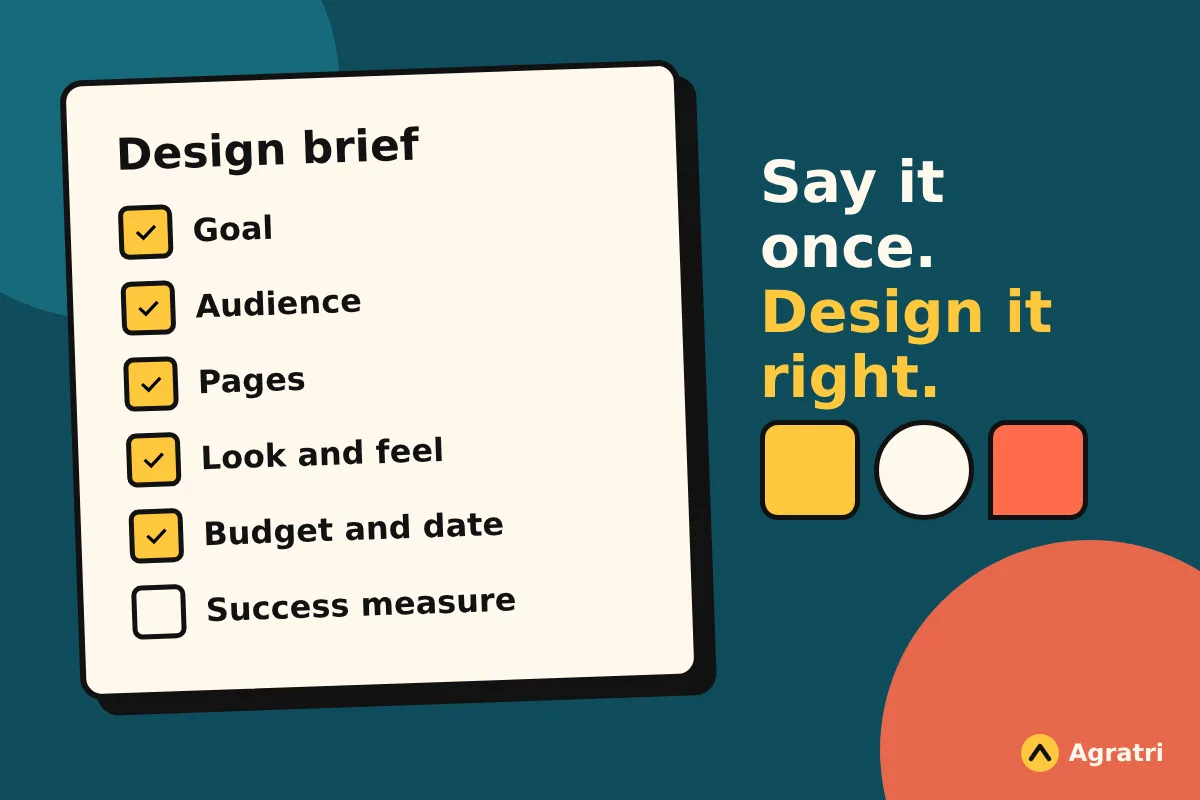
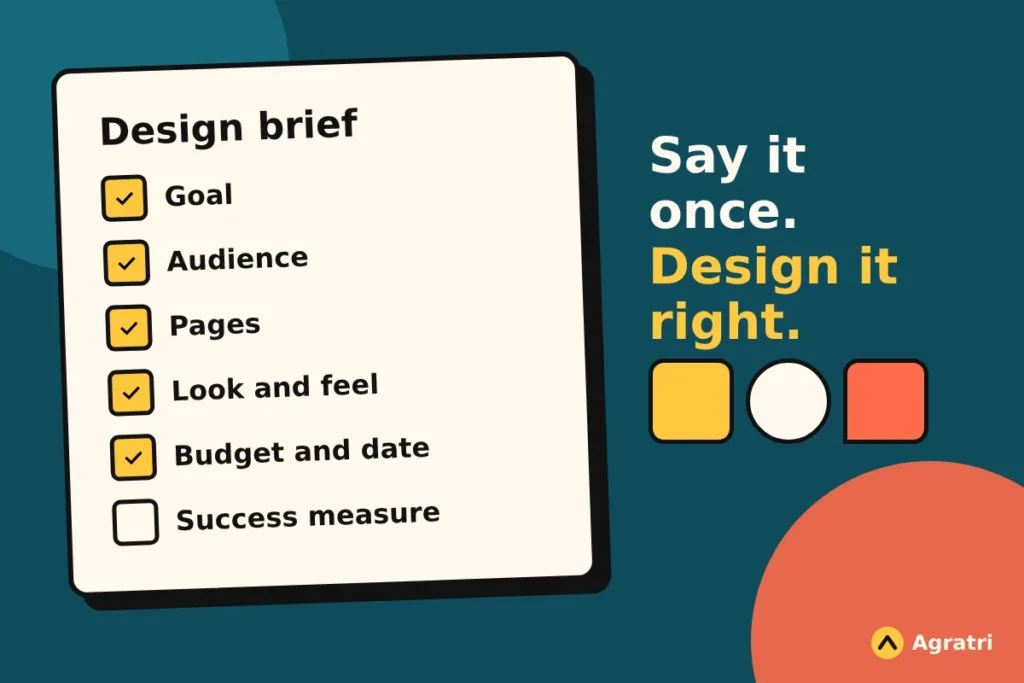
Use this list to check your draft before you send it. If you can tick every line, your website design brief is ready.
- Two or three sentences about your business.
- One main goal for the website.
- A short description of your ideal visitor and their device.
- A page list, with the owner of the text and photos for each page.
- Two or three reference sites, with a reason for each.
- Brand assets: logo, colors and fonts, if you have them.
- Required features and tools.
- A budget range and a launch date.
- A simple way to measure success after launch.
- One person who approves feedback for your side.
The last point matters more than it looks. When several people send separate feedback, designers receive conflicting notes. As a result, the project slows down. Name one decision maker and the review rounds stay short.
Wireframe, mockup and prototype: what to ask for
Once your website design brief is agreed, a good design process moves in clear steps. The names sound technical, but each step is simple.
- A wireframe is a black-and-white layout that shows where things go on each page. It focuses on structure and content, not colors.
- A mockup is a full-color design of a page. It shows the fonts, images and style of the finished site.
- A prototype is a clickable version that lets you try the menu and buttons before anyone writes code.
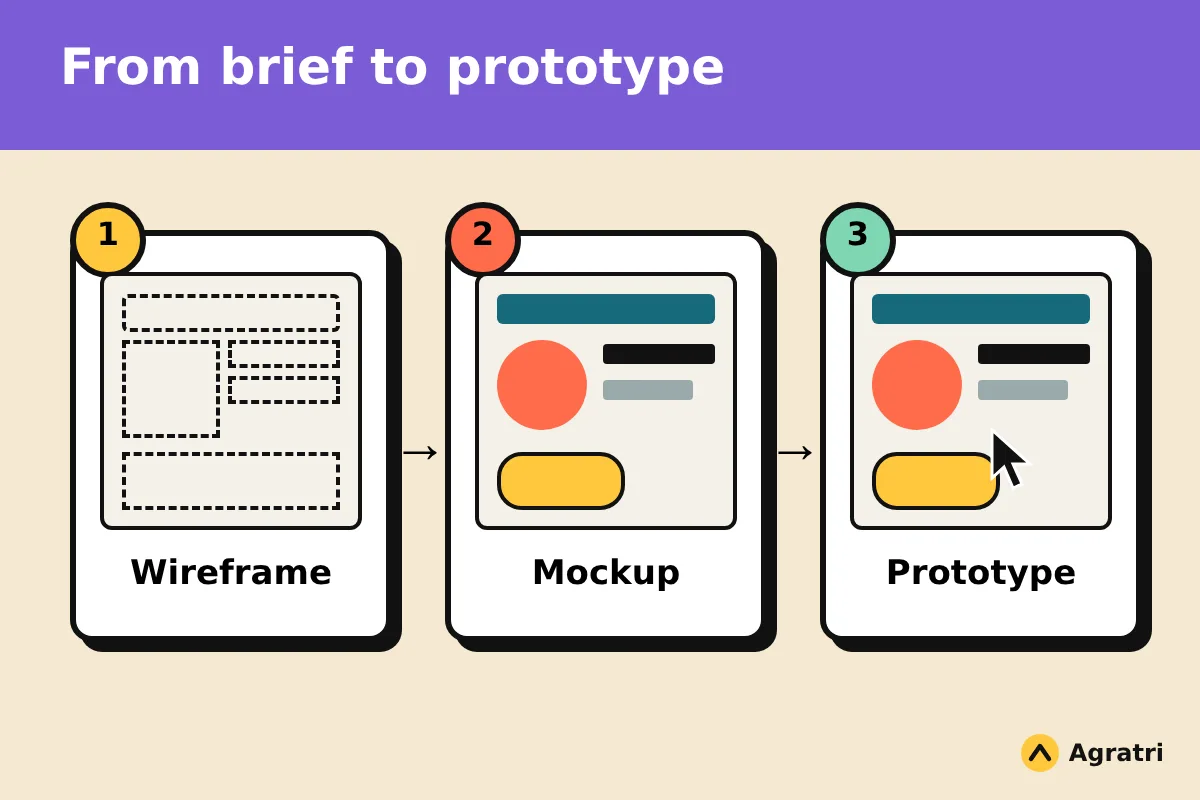
It is cheaper to change a layout in a wireframe than in finished code. That is why reviewing each step matters. Ask your designer which of these steps are part of the quote, and how many revision rounds are included.
Accessibility also belongs in your website design brief. Readable text, clear contrast and keyboard-friendly menus help every visitor. The W3C offers a helpful introduction to web accessibility that you can share with your designer.
How to use your brief with Agratri
Our UI/UX design service starts with a research and goals workshop. After that, you receive wireframes, user flows and high-fidelity page designs. You also get a design system for colors, type and components, and a clickable prototype to review. A clear website design brief makes the workshop faster because the main answers are already written down.
We send one price and one timeline, agreed in writing before design starts. Revision rounds are included, and the final files arrive organized and ready for a developer.
A custom design is not always the right first step. If a ready-made theme can cover most of your needs, it may be faster and cheaper. Our guide on choosing between theme customization and a custom build explains how to decide. You can also read about whether an HTML template or a WordPress theme suits your project before you commit.
Frequently asked questions
How long should a website design brief be?
Two to three pages are enough for most projects. Short and specific works better than long and vague.
Do I need a brief if I use a ready-made theme?
Yes, a website design brief still helps. Your page list, features and goals tell you which theme fits, so you avoid paying for features you will not use.
What is the difference between a design brief and a project scope?
In short, the website design brief describes your goals, audience and needs. The scope is the studio’s written answer: what it will deliver, for what price and by when.
Should I include my budget in the brief?
Yes, a range is best. It helps the designer propose a plan that fits, instead of a plan you must trim later.
Can the designer help me write the brief?
Many studios will. If you are stuck, share what you have and ask for help. You can start by sending your notes through our contact page.
Next step: turn your brief into a design
A strong website design brief gives your project a clear start and a clear finish. Write the first version today, keep it short and then refine it with your designer. When you are ready, tell us about your project and we will reply with one price and one timeline.