WordPress theme development cost depends on four things: how unique your design is, how many features you need, how many page types the theme handles, and who builds it. A custom theme is paid work from first sketch to launch, so the price follows the scope. This guide shows what you pay for and what moves the price. It also shows how to budget before you ask for a quote.
You will not find one magic number here, and that is on purpose. Quotes differ widely because projects differ widely. Instead, you will learn how to place your own project in the right range.
What does WordPress theme development cost cover?
A custom theme is a set of templates, styles and scripts built around your design and your content. First, the developer plans the structure. Next, they write the code for each page type. Finally, they test it and hand it over.
Most quotes mix some of these jobs:
- Planning the page types and the content structure
- Building templates for the home page, inner pages, blog and archives
- Responsive layouts for phones, tablets and desktops
- Custom post types and fields for special content
- Speed work, such as lean scripts and image handling
- Cross-browser testing and fixes
- Documentation and handover
Our own custom theme development service lists the same jobs. It also includes a staging link, so you can review progress and request changes during the build. Ask every developer for a similar list, because a vague quote hides extra costs.
Why published prices differ so much
If you search for WordPress theme development cost, you will see very different answers. That happens for good reasons. A freelancer who builds one theme at a time works differently from an agency with designers, developers and testers. Rates also change with experience and location.
Scope matters even more. A five-page brochure theme is a small job. A theme with member areas, booking forms and custom search is a large one. Because of this, treat any single price you read online as a rough signal, not as a promise.
Here is a simple way to think about it:
- Small build: a few page templates, standard blog layout and no special features.
- Mid-level build: many page types, custom fields, forms and a few connected tools.
- Complex build: custom content models, search or filtering, user accounts and deep integrations.
Find the tier that matches your site first. Then refine your estimate with the factors below.
Seven factors that move your WordPress theme development cost
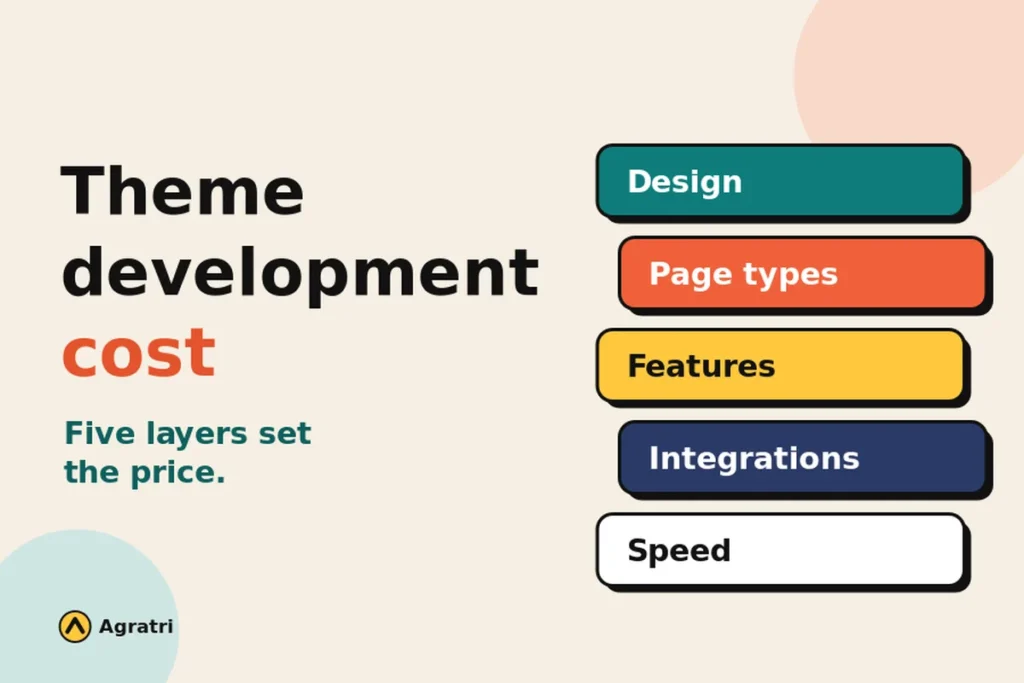
Every quote comes from the same handful of levers. Know them, and you can predict where your price will land.
Design source
Design is often the biggest swing in WordPress theme development cost. If you already have finished design files, the developer can build from them directly. If you do not, someone has to create the design first. That is why a clear brief saves money. Our guide to the website design brief shows what to write down.
Number of page types
A page type is a template with its own layout. Examples are a home page, a service page and a portfolio item. Each one needs design, code and testing. So a site with twelve page types costs more than a site with four.
Custom features
Every feature that WordPress does not include adds hours, and hours drive WordPress theme development cost. Examples are filters, booking steps, calculators and special form fields. Therefore, list your must-have features first, then cut the rest.
Integrations
Connecting the theme to a CRM, a payment tool or a mailing list often takes longer than people expect. Besides, each tool has its own rules and data format. Ask for every integration to be priced on its own line.
Page builder or classic code
Some projects need a classic coded theme. Others need a theme that works smoothly with Elementor or the block editor so your team can edit pages visually. Both are valid choices, but they shape the work differently. Decide this early, because it changes how templates are built.
Speed and accessibility goals
Fast pages keep visitors, so speed work belongs in your plan. Google measures loading, interaction and layout stability through Core Web Vitals. Accessible markup also helps every visitor. Both goals take care during the build, which is cheaper than fixing them later.
Timeline and revisions
Rushed projects cost more, since developers must move other work aside. Open-ended revisions raise the price too. In short, a clear deadline and a fixed number of review rounds are your cheapest tools.
Ready-made theme, customization or custom build?
Choosing the right route early is the best way to control your WordPress theme development cost. Many sites do not need a theme built from zero. A ready-made theme already covers common layouts, and light changes can make it match your brand.
The comparison of theme customization and a custom theme explains this trade-off in detail. As a rule of thumb, a ready-made theme with customization fits most small business, portfolio and agency sites. For reference, our service page lists theme customization as starting at $149. It is quoted as a fixed price after we understand your needs.
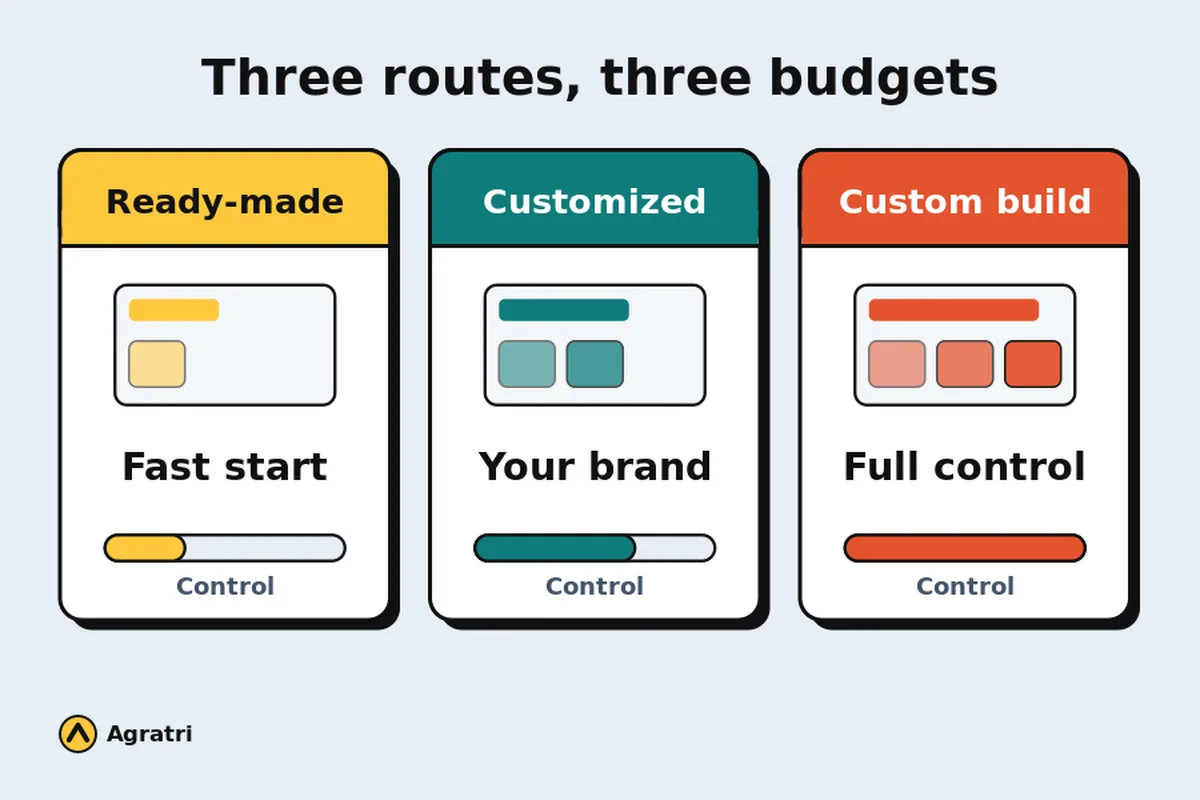
A custom build makes sense in a few cases. Your site may need a structure no theme offers. You may have a finished design that must be matched closely. Or your team may need clean code that a future developer can extend. In those cases, the extra WordPress theme development cost buys control.
If your design lives in Figma, read our guide on turning a Figma design into a WordPress theme. It shows how an approved design becomes a working build step by step.
How to budget your theme project step by step
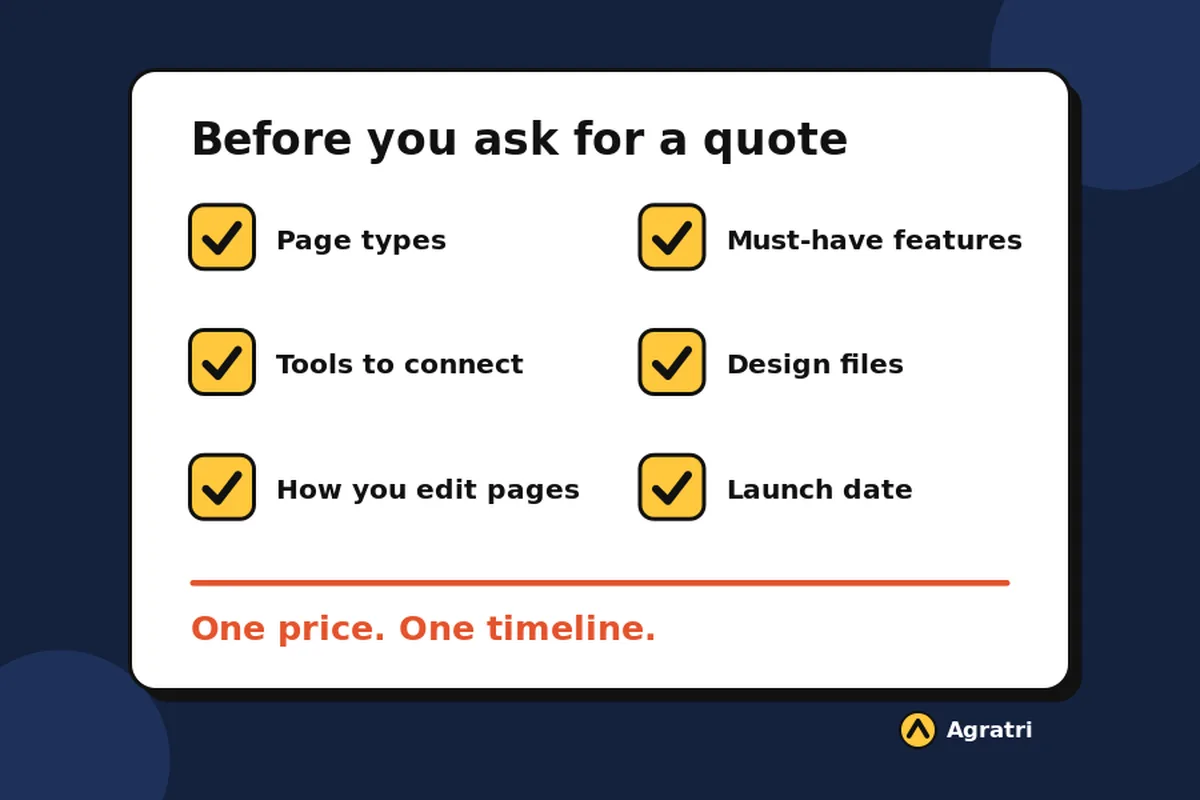
- List your page types. Count each unique layout, not each page.
- Write your must-have features. Separate real needs from nice-to-haves.
- List the tools to connect. Include forms, email, payments and analytics.
- Pick your design route. Choose existing design files, a new design or a ready-made theme.
- Choose how you will edit pages. Decide between classic code, the block editor or Elementor.
- Set a launch date. A fixed date shapes both the plan and the price.
- Ask for one price and one timeline. Make sure every line item is written down.
Our process follows the same path. You send your design files or ideas with a short brief. Then we confirm the scope and reply with one price and one timeline before development begins.
Mistakes that raise your final bill
Most overruns come from a few repeat mistakes. Avoid them, and your quote will stay close to your final bill.
- No written scope. Without a list of page types and features, every change becomes extra work.
- Features added mid-project. Each new idea pushes back the timeline and raises the price.
- Design unfinished at kickoff. Building while the design still changes means rework.
- A theme sold as a custom build. Ask what is truly custom and what is a configured theme.
- No handover plan. Without documentation, the next developer must guess how it works.
In short, a clear scope is the cheapest way to hold down your WordPress theme development cost. Write it down before the first line of code.
Costs after launch
Your budget does not end at launch. WordPress, plugins and your theme need regular updates, and backups protect your content. Hosting and your domain also renew each year. As a result, a yearly budget should include a small line for care.
A well-built theme keeps this part of your WordPress theme development cost low, because clean code is easier to maintain. The official WordPress Theme Handbook describes the standards good themes follow. Ask your developer how they match it.
Frequently asked questions
How much does WordPress theme development cost?
It depends on scope, so there is no single price for WordPress theme development cost. A small theme with a few templates costs far less than one with custom features and integrations. Ask for a written quote based on your page types and feature list.
Is a custom theme better than a ready-made theme?
Not always. A ready-made theme with some customization covers most business sites and costs less. Choose a custom build when your structure, design or features do not fit any existing theme.
What affects the price the most?
Design source, the number of page types and custom features usually move WordPress theme development cost the most. Integrations and speed goals come next. A clear scope keeps all of them under control.
How long does a custom theme take?
It depends on the number of page types and features. A developer can only give a fair estimate after reading your brief. So ask for one timeline in writing before work starts.
What should I prepare before I ask for a quote?
Prepare your design files, your page types, your feature list, the tools to connect and your launch date. With these details, a developer can give you one clear price and one timeline.
Get a fixed quote from Agratri
Ready to put numbers on your theme? First, share your design files or ideas and a short brief. You get one price and one timeline before work starts, so your WordPress theme development cost has no surprises. Contact us and tell us about your project.